
- +91 8652074665
- viral1304@gmail.com
- Office 101, Jainam Arcade, Bhandup West, Mumbai
Best Doctor for ERCP in Bhandup, Mumbai
ERCP Consultation and Treatment in Bhandup
Endoscopic Retrograde Cholangiopancreatography (ERCP) is an advanced endoscopic procedure used to evaluate and treat selected conditions affecting the bile ducts and pancreatic ducts. It can be particularly useful when a stone, narrowing, blockage or other abnormality interferes with the normal flow of bile or pancreatic fluid.Best Doctor for ERCP in Bhandup, Mumbai
Dr. Viral Surani, a gastroenterologist in Bhandup, Mumbai, provides consultation and treatment planning for patients who may require ERCP. A detailed assessment of symptoms, medical history and investigation reports helps determine whether ERCP or another treatment approach is appropriate.
What Is ERCP?
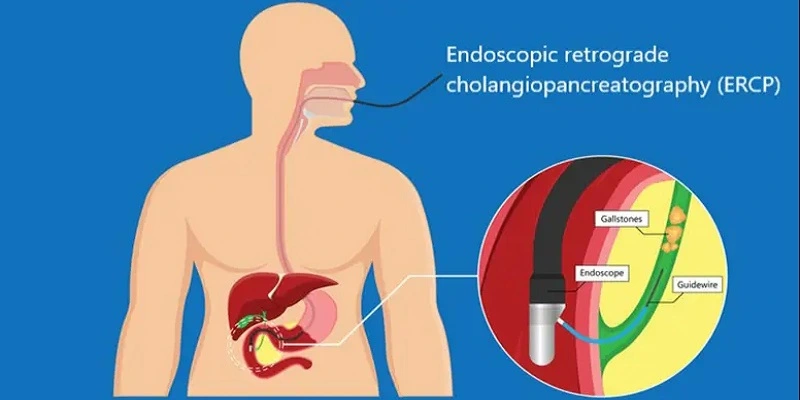
ERCP stands for Endoscopic Retrograde Cholangiopancreatography. It combines endoscopy with X-ray imaging to examine the bile ducts and pancreatic ducts and, when required, perform treatment during the same procedure.Learn About Dr. Viral Surani
During ERCP, a thin flexible endoscope is guided through the mouth and stomach into the first part of the small intestine. The opening of the bile and pancreatic ducts is then accessed. Contrast material may be introduced into the ducts so that the doctor can view them using X-ray imaging. If a blockage or other treatable problem is identified, suitable endoscopic treatment may be performed during the procedure.
Why Is ERCP Performed?
ERCP is generally considered when a patient has a known or suspected problem involving the bile ducts or pancreatic ducts that may require endoscopic intervention.
Depending on the individual case, ERCP may be considered for:
- Common bile duct stones causing obstruction
- Bile duct narrowing or strictures
- Blockage of the pancreatic duct
- Obstructive jaundice
- Selected bile duct or pancreatic duct abnormalities
- Bile leaks following certain procedures
- Conditions requiring biliary or pancreatic duct drainage
- Selected cases where a duct stent may be required
Symptoms That May Require ERCP Evaluation
- Yellowing of the skin or eyes
- Persistent or severe abdominal pain
- Dark-colored urine
- Pale or clay-colored stools
- Fever associated with suspected bile duct obstruction
- Nausea or vomiting
- Unexplained digestive complaints
- Abnormal liver function test results
- Abnormal pancreatic enzyme levels
- Recurrent episodes related to biliary or pancreatic disease
Treatments That May Be Performed During ERCP
Bile Duct Stone Removal:Stones located in the common bile duct can obstruct the normal flow of bile. In appropriate cases, ERCP can be used to remove these stones using specialized endoscopic techniques.
Stent Placement: A temporary or longer-term stent may be placed when a bile or pancreatic duct is narrowed or blocked. The stent helps maintain an opening and support drainage.
Duct Dilation: If a bile duct is significantly narrowed, endoscopic dilation may be considered in selected patients. The appropriate technique depends on the location and cause of the narrowing.
Biliary Drainage: When a blockage prevents normal bile flow, ERCP may be used to establish or improve drainage in appropriate cases.
Management of Selected Bile Leaks: Certain bile leaks occurring after surgery or other procedures may be managed using endoscopic techniques, depending on the location and severity of the leak.
Benefits of ERCP
- Removal of selected bile duct stones
- Relief of certain duct blockages
- Improvement of bile drainage
- Placement of a stent when required
- Treatment of selected bile duct strictures
- Management of certain bile leaks
- May provide endoscopic treatment without the need for conventional surgery in selected cases
Risks and Possible Complications of ERCP
Although ERCP is performed by trained medical specialists, it is an invasive procedure and can have potential complications.
- Pancreatitis
- Bleeding
- Infection
- Perforation
- Abdominal discomfort
- Reactions related to sedation or anesthesia
- Reactions to contrast material
Why Consult Dr. Viral Surani for ERCP?
Dr. Viral Surani provides gastroenterology consultation in Bhandup, Mumbai, for biliary, pancreatic and digestive conditions. Patients seeking ERCP evaluation can consult him for conditions such as bile duct stones, obstruction, strictures and obstructive jaundice.Best Doctor for ERCP in Bhandup, Mumbai. Call 073047 12120 for an appointment.
Conclusion
ERCP is an important endoscopic procedure used to diagnose and treat selected conditions affecting the bile ducts and pancreatic ducts. It may help manage certain stones, blockages, strictures and bile leaks when endoscopic treatment is appropriate. If you experience jaundice, persistent abdominal pain, or symptoms suggesting a biliary or pancreatic problem, consult a gastroenterologist for proper evaluation and treatment planning.
Call 073047 12120 to schedule an appointment with Dr. Viral Surani.
Frequently Asked Questions
Q.1. What is ERCP?
Ans - ERCP (Endoscopic Retrograde Cholangiopancreatography) is a specialized procedure used to diagnose and treat certain problems affecting the bile ducts and pancreatic ducts. It combines endoscopy with X-ray imaging.
Q.2. Why is ERCP performed?
Ans - ERCP may be performed to diagnose or treat conditions such as bile duct stones, duct blockages, narrowing of the bile ducts, bile leaks and selected pancreatic duct problems.
Q.3. Can ERCP remove bile duct stones?
Ans - Yes, in appropriate cases, ERCP can be used to remove stones that are blocking the bile duct. The exact treatment depends on the size, location and number of stones.
Q.4. Is ERCP used for jaundice?
Ans - ERCP may be recommended in selected patients with obstructive jaundice when a blockage or narrowing in the bile duct is suspected and requires endoscopic evaluation or treatment.
Q.5. Is ERCP a painful procedure?
Ans - ERCP is generally performed under sedation or anesthesia to improve patient comfort. Patients are monitored during and after the procedure.
Q.6. How long does an ERCP procedure take?
Ans - The duration of ERCP varies depending on the patient's condition and the treatment required. Your gastroenterologist can provide more specific information after evaluating your case.
Q.7. What are the possible risks of ERCP?
Ans - Possible complications include pancreatitis, bleeding, infection and, rarely, perforation. Sedation or contrast material may also have associated risks. Your doctor will explain the potential benefits and risks before the procedure.
Q.8. Can a stent be placed during ERCP?
Ans - Yes, a stent may be placed during ERCP in selected cases to help maintain drainage through a narrowed or blocked bile or pancreatic duct.
Q.9. Will I need someone to accompany me after ERCP?
Ans - If sedation or anesthesia is used, patients may need assistance after the procedure. Follow the discharge and activity instructions provided by the medical team.
Q.10. What happens after ERCP?
Ans - After ERCP, patients are monitored while recovering from sedation or anesthesia. The doctor provides post-procedure instructions and advises appropriate follow-up based on the treatment performed.
Service Areas
Lal Bahadur Shastri Marg | Tagore Nagar | Kannamwar Nagar | Hari Om Nagar | Bhandup West | Bhandup East | Mulund West | Mulund East | Kanjurmarg | Nahur | Vikhroli | Powai | Ghatkopar